


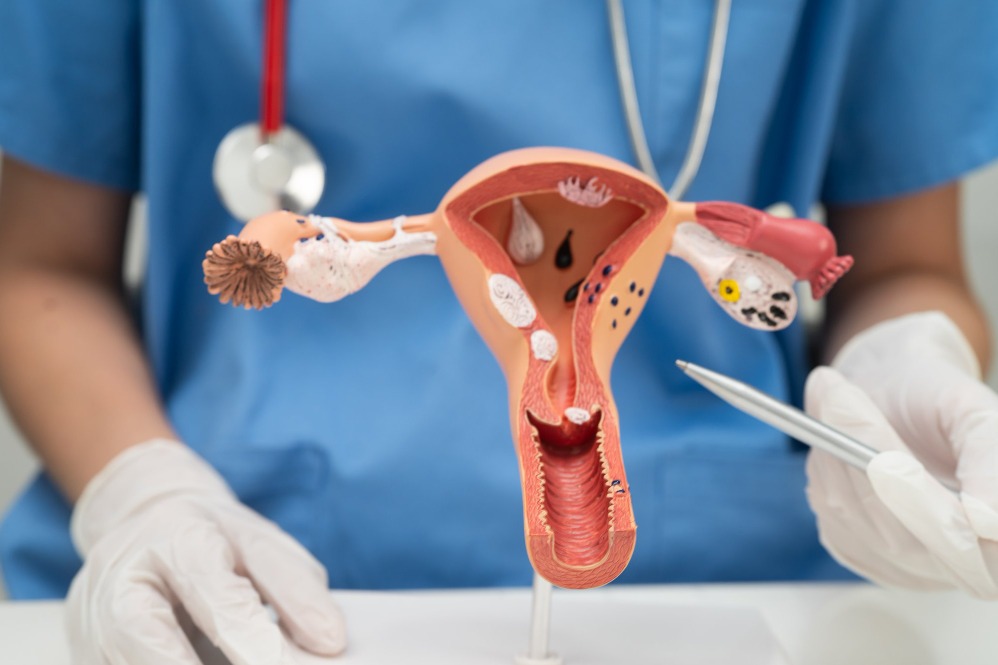
When ultrasound or other investigations suggest a problem inside the uterine cavity, hysteroscopic surgery treatment may provide a way to directly visualise and, in selected cases, treat the abnormality without an abdominal incision.
For women dealing with abnormal bleeding, certain fibroids, polyps or fertility-related uterine concerns, understanding hysteroscopy can help clarify why a gynaecologist may recommend the procedure.
What Is Hysteroscopy?
A hysteroscope is a thin instrument containing a camera that is introduced through the vagina and cervix into the uterus.
Because the instrument follows this natural route, abdominal incisions are generally not required.
Hysteroscopy may be diagnostic, when the main purpose is to inspect the uterine cavity, or operative, when instruments are used to treat a condition identified within the cavity.
Which Problems Can Be Treated?
Operative hysteroscopy may be considered for selected cases involving:
- Endometrial polyps
- Certain submucosal fibroids
- Intrauterine adhesions
- Some uterine septum abnormalities
- Retained tissue in appropriate circumstances
- Other abnormalities within the uterine cavity
The procedure is not suitable for every fibroid or every uterine condition.
A fibroid located primarily within the muscular wall or on the outer surface of the uterus, for example, may require a different approach.
How Is It Different From Laparoscopy?
This is one of the most common sources of confusion.
Hysteroscopy looks inside the uterine cavity through the cervix.
Laparoscopy looks at the pelvic organs from inside the abdomen through small abdominal incisions.
A patient may therefore be advised hysteroscopy for an intrauterine polyp while another may need laparoscopy for an ovarian cyst.
In selected situations, both procedures may be used as part of a broader evaluation or treatment plan.
What Happens Before the Procedure?
Preparation depends on why hysteroscopy is being performed.
A gynaecologist may review ultrasound findings, menstrual history, pregnancy possibility, medications and relevant medical conditions. Blood investigations or other preoperative assessments may be advised depending on the planned procedure and anaesthesia.
Patients should inform the doctor about blood-thinning medicines and other regular medication.
What Is Recovery Like?
Recovery varies between diagnostic and operative procedures.
Some women experience mild cramping or light bleeding afterwards. More extensive hysteroscopic treatment may require additional recovery instructions.
Patients should receive clear guidance about medication, activity and when to seek medical attention.
Symptoms such as significant bleeding, severe worsening pain, fever or other concerning changes after a procedure should be reported promptly.
How Do You Know Whether You Are a Suitable Candidate?
The most important factor is the location and nature of the uterine problem.
Women considering hysteroscopic surgery treatment in Thane should ask whether imaging clearly indicates an abnormality within the uterine cavity and whether hysteroscopy is intended for diagnosis, treatment or both.
Dr. Jagruti Kadam can assess symptoms and investigation findings before discussing whether hysteroscopy or another gynaecological approach is appropriate.
Hysteroscopy can provide direct access to problems inside the uterus while avoiding an abdominal incision, but its usefulness depends on choosing it for the right condition. Understanding exactly what the procedure is expected to diagnose or treat is an important part of being prepared for surgery.