

An ovarian cyst does not automatically require an operation, and a small incision does not automatically make every operation appropriate. By understanding ultrasound findings, fertility considerations, surgical options, and recovery, you can have a more useful ovarian cyst surgery consultation and ask what treatment fits your situation.
Key takeaways
- Laparoscopy uses small abdominal incisions under general anaesthesia.
- Observation can be safer when ultrasound shows a simple, low-risk cyst.
- Ask how cyst size, appearance and fertility plans affect the surgical route.
- Discuss cyst removal, ovarian tissue preservation and recovery before surgery.
What minimally invasive ovarian cyst surgery actually involves
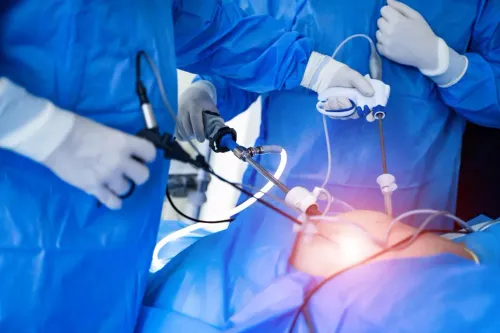
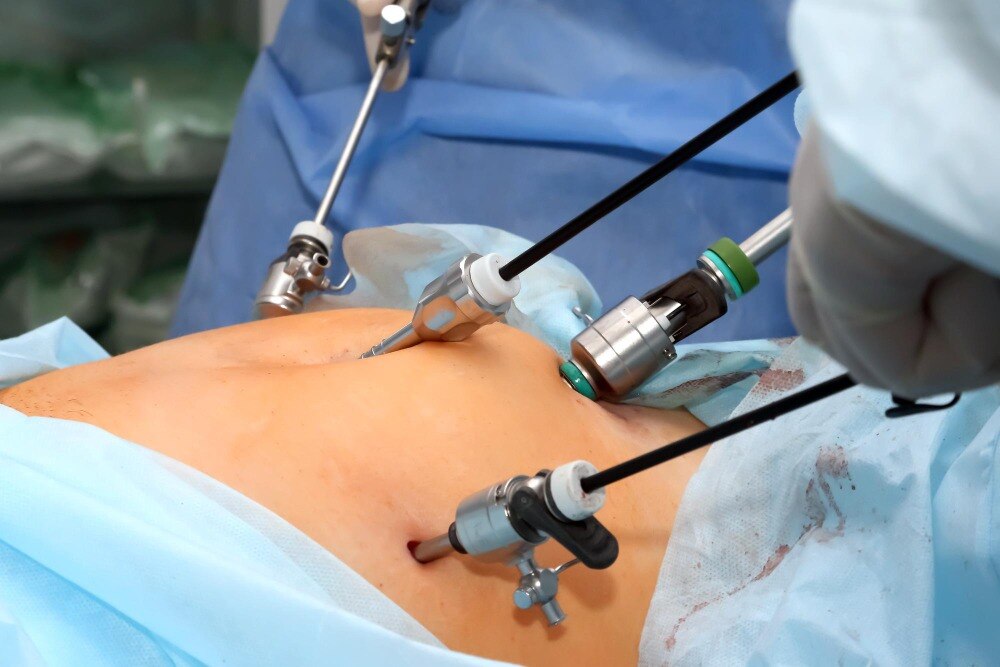
Minimal invasive surgery ovarian cyst treatment refers to the route into the abdomen, not a promise of scar-free or risk-free care. Laparoscopy uses general anaesthesia and several small abdominal incisions rather than one large opening.
1. The surgeon introduces carbon dioxide to create working space. A laparoscope, a thin camera-equipped instrument, enters through one port; surgical instruments pass through separate ports.
2. The surgeon examines the pelvis, separates the cyst from ovarian tissue, and removes it or the affected ovary. When appropriate, the cyst goes into a retrieval bag before removal.
3. Removed tissue is sent to a laboratory for pathology testing. This examination identifies the tissue type and checks for unexpected disease.
Laparoscopic ovarian cystectomy removes the cyst while aiming to preserve the ovary. Oophorectomy removes part or all of the ovary, so the planned procedure and the conditions for changing it should be clear before surgery.
Minimally invasive access does not guarantee no scar, no hospital stay, no complications, or no effect on fertility. Possible complications include bleeding, infection, and injury to the bowel, bladder, ureter, or blood vessels.
If visibility, bleeding, adhesions, cyst contents, or suspected cancer makes laparoscopy unsafe, the surgeon may convert to open abdominal surgery through a larger incision.
Why observation can be safer than immediate cyst removal
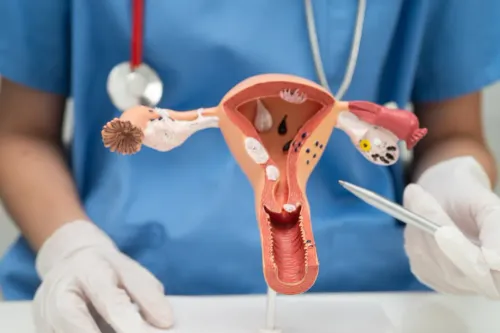
Not every ovarian cyst needs surgery. Functional cysts linked to ovulation often disappear over one or more menstrual cycles, so observation with a repeat transvaginal ultrasound is appropriate when symptoms are mild or absent and the cyst appears simple.
Treatment depends on symptoms, menopausal status, ultrasound appearance, and change over time—not size alone. A simple cyst that is shrinking may be safer to monitor than to remove, because surgery can cause bleeding, adhesions, or loss of healthy ovarian tissue.
| Option | What it means | When it applies |
|---|---|---|
| Observation | Repeat ultrasound tracks size and appearance | Simple-appearing cyst, mild symptoms, or no symptoms |
| Medication | Pain relief treats symptoms; hormonal contraception may reduce new ovulation-related cysts | It does not reliably dissolve an existing cyst |
| Surgery | Removes the cyst or ovary when risk outweighs observation | Persistent pain, rapid growth, rupture, torsion risk, or concerning imaging |
| Aspiration | Drains fluid through a needle | The cyst can refill, and fluid does not reliably exclude cancer; endometriomas have a high recurrence risk |
Solid areas, papillary projections, thick or irregular septations, bilateral cysts, ascites, increased blood flow, or rapid growth need further assessment. Persistent pain, suspected rupture, or torsion risk can shift the decision toward urgent treatment, especially after menopause.
This is why minimal invasive surgery ovarian cyst treatment in Thane should begin with risk assessment, not a size label.
Seek immediate assessment for sudden severe one-sided pain, nausea, vomiting, faintness, fever, or abdominal distension. These symptoms can signal torsion, rupture, or internal bleeding; do not wait for a routine consultation.
How ultrasound and testing determine the surgical approach
Before anyone chooses laparoscopy, an ovarian cyst surgery consultation matches the scan to your symptoms and risk profile. “Minimal invasive surgery ovarian cyst” does not name one standard operation: the plan may be observation, laparoscopic cystectomy, removal of an ovary and tube, or open surgery.
1. The clinician reviews the transvaginal ultrasound for size, solid areas, papillary projections, septations, blood flow, bilateral cysts, ascites, and signs of torsion or rupture.
2. They ask about pain, bleeding, menstrual or menopausal status, previous abdominal operations, medicines, bleeding risk, and the possibility of pregnancy. A pregnancy test is important when pregnancy is possible.
3. Follow-up imaging can show whether a presumed functional cyst is shrinking, stable, or changing. A simple-appearing cyst with mild or no symptoms may lead to observation; a benign-appearing cyst that persists or causes symptoms may lead to laparoscopic cystectomy.
4. CA-125 may support risk assessment when clinically appropriate, particularly after menopause. It cannot diagnose or exclude ovarian cancer by itself.
A very large cyst, extensive adhesions, difficult anatomy, suspected cancer, or concern about rupture can make laparotomy safer than routine laparoscopy. If malignancy is suspected, the operation may remove an ovary and tube or involve formal staging rather than simple cyst removal.
A cyst found during pregnancy is not automatically operated on. Ultrasound monitoring is common, with surgery reserved for strong cancer concern, significant symptoms, torsion, or another complication; timing is individualized.
What to ask before choosing laparoscopic surgery in Thane
Before consenting, ask exactly what operation is planned and what would make the surgeon change it.
| Option | What it means | Ask when it applies |
|---|---|---|
| Laparoscopic cystectomy | Removes the cyst while aiming to preserve the ovary | Is the ultrasound appearance suitable? |
| Ovary and tube removal | Removes one ovary and its fallopian tube | When would cancer concern or damaged tissue require it? |
| Aspiration | Drains fluid, but the cyst can refill and fluid does not reliably exclude cancer | Why is this preferable to tissue removal? |
| Observation | Repeat ultrasound without immediate surgery | Could a simple, mild-symptom cyst resolve? |
| Laparotomy | Open abdominal surgery through a larger incision | Could size, adhesions, rupture risk, or cancer concern make it safer? |
During your ovarian cyst surgery consultation, ask:
- Which ultrasound features support surgery: solid areas, papillary projections, thick septations, blood flow, rapid growth, or bilateral cysts?
- Could this be endometriosis, specifically an endometrioma?
- How much ovarian tissue do you expect to preserve, and under what circumstances would you remove the ovary?
- Is conversion to laparotomy possible, and what is the backup plan if the findings differ from the scan?
- How will pathology results change follow-up?
If future pregnancy matters, discuss ovarian reserve, the greater fertility impact of bilateral surgery, endometrioma-specific risks, fertility preservation, and referral to a reproductive specialist.
For minimal invasive surgery ovarian cyst treatment in Thane or laparoscopic surgery ovarian cyst in Thane, compare the procedure, alternatives, cancer-risk assessment, and contingency plan—not the clinic label. Dr. Jagruti Kadam 8048033934 can help frame these questions with a Thane gynecology provider.
Related service
Laparoscopic Gynaecologist ₹1000 Dr. Jagruti Kadam is a skilled laparoscopic gynecologist offering advanced minimally invasive surgical care for various women’s health conditions. View service → |
What recovery and fertility trade-offs should you expect
After uncomplicated laparoscopy, recovery is commonly measured in days rather than weeks. Minimal invasive surgery ovarian cyst treatment still involves temporary abdominal discomfort, fatigue, and shoulder-tip pain from residual carbon dioxide; it does not guarantee no scar, complications, or hospital stay.
| Procedure | Usual recovery trade-off | Fertility consideration |
|---|---|---|
| Laparoscopic ovarian cystectomy | Often shorter recovery | Preserves ovarian tissue when safe |
| Ovary or tube removal | Longer recovery than cystectomy | Removes some or all ovarian tissue |
| Laparotomy | Larger incision and recovery measured in weeks | May be necessary for safety or suspected cancer |
Return to work, driving, exercise, and sexual activity depends on the operation and your recovery. Ask exactly when each activity is safe rather than following a generic timetable.
Fertility planning belongs in the discussion before surgery. Removing an endometrioma can reduce ovarian reserve, and bilateral surgery has greater potential impact. For a premenopausal patient with a benign-appearing cyst, ovarian-sparing cystectomy is often preferred when technically safe.
Preservation may fail if the cyst has replaced most of the ovary, torsion has destroyed tissue, bleeding cannot be controlled, or cancer is suspected.
Seek urgent medical advice after discharge for:
- Worsening pain, fever, heavy bleeding, vomiting, or breathing difficulty
- A red, increasingly painful, or draining wound
The key trade-off is lower short-term surgical burden for a suitable cyst against careful selection and possible conversion to open surgery. Discuss fertility preservation or specialist referral before treatment if you may want a future pregnancy.
Frequently asked questions
What does minimally invasive ovarian cyst surgery involve?
Laparoscopic surgery uses general anaesthesia and several small abdominal incisions to access and remove an ovarian cyst.
When is observation safer than immediate ovarian cyst removal?
Observation can be safer when ultrasound shows a simple cyst without concerning features and symptoms remain manageable.
How do ultrasound and testing determine the surgical approach?
Ultrasound assesses the cyst’s size, structure and appearance; symptoms and additional testing help determine whether observation or surgery is appropriate.
What should you ask before choosing laparoscopic surgery in Thane?
Ask about the recommended approach, risks, recovery time, possible ovarian tissue removal and how the procedure affects fertility.
What recovery and fertility trade-offs should you expect?
Laparoscopy usually involves smaller incisions than open surgery, but recovery and fertility effects depend on the cyst, procedure and amount of ovarian tissue removed.