


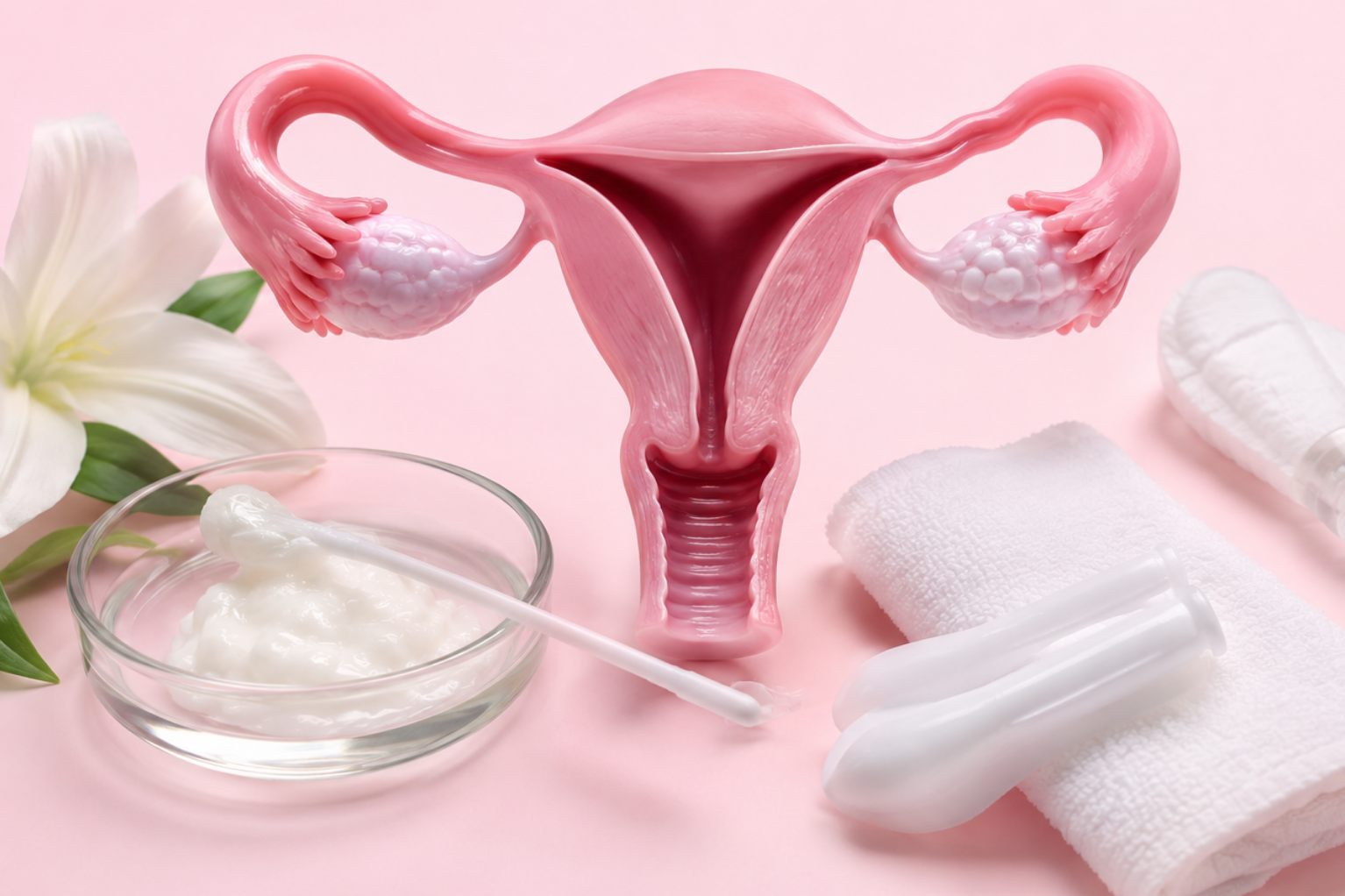
Vaginal discharge is normal at many stages of the menstrual cycle. The amount and consistency can change around ovulation, before menstruation, during pregnancy and with hormonal fluctuations.
White discharge treatment becomes relevant when the discharge changes significantly or occurs with symptoms such as itching, irritation, unpleasant odour, pelvic discomfort or pain during urination.
When White Discharge Can Be Normal
Normal vaginal discharge is often clear or whitish and does not usually cause strong odour, itching or pain.
Its appearance can change throughout the month because of hormonal changes. This physiological discharge generally does not require treatment.
The presence of discharge alone is therefore not enough to diagnose an infection.
Signs That Need Evaluation
A gynaecological assessment may be appropriate when discharge is associated with:
- Persistent itching
- Vulval redness or irritation
- Strong or unusual odour
- Thick, curd-like discharge
- Yellowish, greenish or grey discharge
- Burning during urination
- Pain during intercourse
- Lower abdominal or pelvic pain
- Bleeding unrelated to menstruation
These symptoms can occur for different reasons and should not automatically be treated as a fungal infection.
Possible Causes
One common cause of thick white discharge accompanied by itching is vulvovaginal candidiasis, often called a yeast infection.
However, other possibilities include bacterial vaginosis, sexually transmitted infections, cervical infections, irritation from products and hormonal changes.
Because these conditions require different approaches, repeatedly using over-the-counter antifungal medicines without confirming the cause can be unhelpful.
How Is the Cause Diagnosed?
The gynaecologist usually begins with the nature and duration of symptoms.
Questions may cover menstrual history, pregnancy possibility, diabetes, recent antibiotic use, sexual history, hygiene products and previous episodes.
A pelvic examination or laboratory testing may be recommended depending on the symptoms.
Testing becomes particularly relevant when symptoms recur, do not respond to previous treatment or suggest an infection requiring specific therapy.
Avoid Common Self-Treatment Mistakes
Women experiencing recurrent discharge sometimes use intimate washes, antiseptics or home remedies in an attempt to keep the vagina 'clean.'
The vagina has its own microbial environment, and unnecessary products can sometimes increase irritation.
Practical precautions include:
- Avoid unnecessary vaginal douching
- Use breathable underwear
- Change out of damp clothing promptly
- Avoid strongly fragranced intimate products if they cause irritation
- Take prescribed treatment for the recommended duration
- Seek reassessment when symptoms repeatedly return
If diabetes or another underlying condition contributes to recurrent infections, addressing that factor can also be important.
When Should You See a Gynaecologist?
Persistent or recurrent symptoms deserve evaluation rather than repeated self-medication.
Pregnant women should also discuss unusual vaginal discharge with their obstetric care provider, particularly when accompanied by bleeding, pain, fever, fluid leakage or other concerning symptoms.
Women seeking white discharge treatment in Thane can consult Dr. Jagruti Kadam for evaluation based on symptoms, examination findings and appropriate investigations where required.
The most effective approach is not simply to stop the discharge. It is to determine whether the discharge is physiological or caused by infection, inflammation or another gynaecological condition and then treat the underlying cause appropriately.