

Waiting too long for help can narrow your options, while testing without a clear reason can add cost and confusion. By the end, you will know when to book an evaluation, which records and questions to prepare, and what the first investigations are designed to find.
Key takeaways
- Seek evaluation after 12 months if younger than 35 and cycles are regular.
- Seek evaluation after six months if you are 35 or older.
- Both partners should attend because fertility factors can affect either partner.
- Bring menstrual dates, medical records, medications, and prior fertility test results.
When should you schedule an infertility evaluation?
If the woman is younger than 35, schedule an infertility evaluation after 12 months of regular, unprotected vaginal intercourse without conception. The 12 months infertility evaluation threshold assumes intercourse occurs often enough for conception and that no contraception is being used.
At ages 35 to 39, use the 6 months infertility evaluation threshold; at age 40 or older, arrange a fertility evaluation after age 40 promptly rather than waiting.
Seek assessment sooner than these intervals if any of the following applies:
- Periods are absent or highly irregular.
- Endometriosis, tubal disease, pelvic inflammatory disease, or fibroids affecting the uterine cavity is suspected.
- You have had pelvic surgery, chemotherapy, or radiation.
- You have experienced recurrent pregnancy loss.
- Either partner has erectile or ejaculatory problems, testicular disease, or another known or suspected fertility problem.
Regular periods do not remove age-related concerns. Egg number and genetic competence decline with age, so regular cycles do not rule out a lower chance of conception or a higher risk of miscarriage.
Both partners should seek guidance when a known concern exists, rather than waiting for the standard time limit or assuming infertility is solely a female health issue.
Why should both partners attend, and what happens at the first appointment?
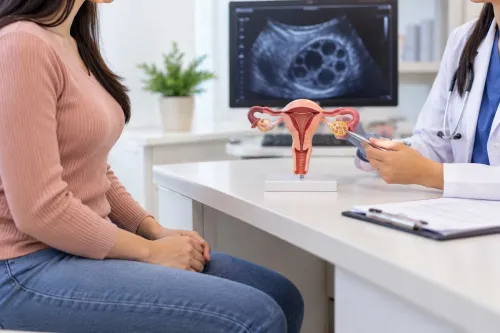
Both partners should attend the first infertility appointment because fertility problems can involve sperm, ovulation, the tubes, the uterus, age, or several factors together. Normal sexual function and a normal pelvic examination do not replace a semen analysis or exclude male-factor infertility.
The clinician will take an infertility medical history covering:
- Cycle length, period dates, bleeding pattern, and ovulation symptoms.
- Previous pregnancies, miscarriages, births, and contraception.
- Intercourse frequency and timing, plus pain during periods or intercourse.
- Pelvic infections, pelvic inflammatory disease, and prior operations.
- Medicines, chronic illnesses, cancer treatment, and relevant family history.
- Erectile, ejaculatory, testicular, or other reproductive concerns in the male partner.
A focused physical examination may include general health, body habitus, thyroid or androgen-related signs, and a pelvic examination when appropriate. A normal pelvic examination does not rule out blocked tubes, irregular ovulation, sperm abnormalities, or age-related changes in egg number and genetic competence.
Use this records to bring to fertility consultation checklist:
- Cycle-tracking records.
- Pregnancy and miscarriage records.
- Operative reports.
- A current medication list.
- Previous semen-analysis reports.
- Earlier ultrasound or laboratory results.
Bring records for both partners. Reviewing them together helps the clinician choose targeted tests instead of assuming the problem is solely female infertility.
Which tests usually make up the initial assessment?
Initial infertility investigations are chosen to answer four practical questions: Are sperm adequate? Is ovulation occurring? Do the uterus and ovaries look structurally normal? Are the fallopian tubes open? Testing usually involves both partners rather than assuming the cause is female.
| Investigation | Question it answers | What it assesses |
|---|---|---|
| Semen analysis | Are sperm available in suitable numbers and quality? | Sperm concentration, movement, and shape |
| Ovulation assessment | Is an egg being released? | Cycle pattern, ovulation evidence, and targeted blood testing when indicated |
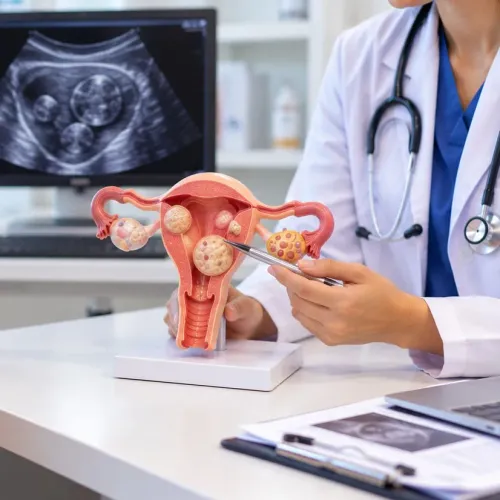
| Pelvic ultrasound fertility assessment | What can be seen in the uterus and ovaries? | Fibroids, polyps, ovarian findings, uterine shape, and other visible structural changes |
| Tubal-patency testing | Is there a route through the tubes for sperm and egg? | Blocked or abnormal tubes using hysterosalpingography (HSG) fertility test or contrast sonography, including sonohysterography with tubal contrast |
Diagnostic laparoscopy is not usually the first test. Consider it when symptoms or history point to endometriosis, pelvic adhesions, or another pelvic disorder that other tests cannot adequately assess.
Clinicians do not automatically order a large hormone panel. They select tests from your history and examination, such as a pregnancy test, thyroid-stimulating hormone for relevant symptoms, prolactin with irregular or absent ovulation or galactorrhea, and androgen testing when signs of androgen excess are present.
How do you prepare for semen and ovulation assessment?
Follow the laboratory’s semen analysis preparation instructions exactly; collection errors can make a useful test look abnormal. The required semen sample abstinence interval is laboratory-specific, so do not substitute a general “three days” rule.
1. Abstain for the interval the laboratory gives you, then collect the entire sample by its stated method, usually masturbation into the provided sterile container. Do not use a regular condom or lubricant unless the laboratory supplies an approved option.
2. Avoid losing the first portion because it contains a high concentration of sperm. If any sample is spilled, tell the laboratory rather than guessing that the result remains accurate.
3. Write down the collection time and deliver the container within the laboratory’s specified time and temperature instructions. Do not refrigerate or heat it unless the laboratory explicitly tells you to.
4. An abnormal result commonly leads to repeat testing because sperm concentration, movement, and shape vary between samples. Normal erections, ejaculation, or sexual frequency do not replace a semen analysis.
For irregular periods ovulation testing, track the first day of each period, cycle length, bleeding, and possible ovulation symptoms. A correctly timed mid-luteal progesterone test—usually about seven days before the expected next period—can help confirm ovulation; thyroid-stimulating hormone testing and prolactin testing apply when irregular or absent ovulation, or galactorrhea, makes them relevant.
Pregnancy testing comes first when pregnancy is possible, and targeted androgen testing is appropriate when signs of androgen excess exist. Polycystic ovary syndrome is assessed from the overall clinical picture, including cycle pattern and androgen-excess signs, not one isolated hormone result.
What can the results lead to, and which tests are not routine for everyone?
Infertility test results guide the next decision; they do not automatically lead to IVF. Ovarian reserve testing limitations matter: anti-Müllerian hormone (AMH), antral follicle count, and day-2-to-4 FSH and estradiol mainly estimate response to ovarian stimulation and help plan treatment. They are not general fertility screening tests or reliable predictions of short-term natural conception.
| Test | What it can show | Why it is not routine for everyone |
|---|---|---|
| AMH, antral follicle count, FSH and estradiol | Expected ovarian response to stimulation | They do not reliably predict natural conception soon |
| Postcoital testing | Sperm movement after intercourse | Results vary with timing and do not reliably improve initial decisions |
| Endometrial biopsy for ovulation | Tissue changes in the uterine lining | A correctly timed progesterone test and cycle history usually answer ovulation questions |
| Immune or thrombophilia testing | Selected immune or clotting conditions | Routine testing has limited value without a specific history |
| Sperm DNA-fragmentation testing | DNA damage in sperm | Reserve it for selected cases, such as repeated treatment failure or recurrent loss |
Fertility treatment options after evaluation include timed intercourse, ovulation treatment, surgery for a defined anatomic problem, referral to a male reproductive specialist, intrauterine insemination, or assisted reproductive technology. When IVF is recommended depends on age, diagnosis, tubal status, semen results, preferences, and access—not on one abnormal test.
Dr. Jagruti Kadam 8048033934 can help organize findings and weigh these choices without treating IVF as the automatic next step.
Related services
Infertility Treatment ₹1000 Dr. Jagruti Kadam provides comprehensive infertility treatment with a patient-centered and evidence-based approach. View service → |
Preconception Counselling Treatment Preconception Counselling Treatment ₹1000 Dr. Jagruti Kadam offers expert preconception counselling to help couples prepare for a healthy and safe pregnancy. View service → |
Frequently asked questions
When should you schedule an infertility evaluation?
Schedule one after 12 months of regular, unprotected vaginal intercourse without conception if the woman is younger than 35. Schedule it after six months when she is 35 or older. Seek assessment sooner for irregular or absent periods, known endometriosis, prior pelvic surgery, recurrent pregnancy loss, or suspected sperm problems.
Why should both partners attend the first appointment?
Fertility factors can involve either partner, so evaluating both at the same time avoids delays. The appointment usually covers medical and reproductive history, intercourse timing, menstrual patterns, medications, previous pregnancies, and prior treatment.
Which tests usually make up the initial infertility assessment?
The initial assessment often includes a semen analysis, ovulation assessment, and evaluation of the uterus and fallopian tubes when indicated. Blood tests and pelvic ultrasound are selected according to the medical history and cycle pattern.
How do you prepare for semen and ovulation assessment?
For semen analysis, follow the laboratory's abstinence instructions, collect the full sample in the supplied container, and deliver it within the stated time. For ovulation assessment, record cycle dates, bleeding, ovulation symptoms, and test results; follow instructions for hormone testing or ultrasound.
Are advanced infertility tests routine for everyone?
No. Tests such as laparoscopy, hysteroscopy, genetic testing, advanced sperm testing, and immune or clotting panels are ordered when symptoms, history, or initial results justify them. Results guide whether to continue timed intercourse, treat an identified problem, or discuss assisted reproduction.